| Sunstone Press | www.sunstonepress.com |
|
Fun with the Lone Star State By Lowell Christensen Order from Sunstone: (505) 988-4418 This humorous guide to Texas offers a description of the many splendors of Texas: ambling along uncrowded beaches, azaleas and dogwoods in the spring, distinctive epicurean cuisine (grits), songs to help ya’ll get chronically depressed, sprinting along those uncrowded beaches chased by seven trillion mosquitoes, and other delights such as boiled okra. Here you’ll find out about things that will try to kill you like weather and gar. You’ll also be warned about places where you might get trampled to death like rodeos and dances. And then there are odious insects like love bugs and roaches. You’ll be fully informed about the music, culture, and feedlots that make Texas one of the most interesting places south of Oklahoma. It’s all here in this definitive work on Texas—a great place to bury Cadillacs.
Lowell Christensen lived in Texas for years but his heart and ski boots were always in Colorado. In spite of his background, he has tried to relate some of his experiences, observations and other highly accurate distortions from his adventures in Texas. Website: http://books.google.com/books?id=NxfKPAAACAAJ&dq=9780865341692&hl=en&ei=ISHUTszgNufjiAKM8-3BDg&sa=X&
eBook:
|
|
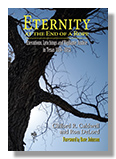
Executions, Lynchings and Vigilante Justice in Texas, 1819–1923 By Clifford R. Caldwell and Ron DeLord See PRAISE FOR THIS BOOK below. Order from Sunstone: (505) 988-4418 Since 1819 over 3,000 souls found their personal “eternity at the end of a rope” in Texas. Some earned their way. Others were the victim of mistaken identity, or an act of vigilante justice. Deserved or not, when the hangman’s knot is pulled up tight and the black cap snugged down over your head it is too late to plead your case.
This remarkable story begins in 1819 with the first legal hanging in Texas. By 1835 accounts of lynching dotted the records. Although by 1923 legal execution by hanging was discontinued in favor of the electric chair, vigilante justice remained a favorite pastime for some. The accounts of violence are numbing. The cultural and racial implications are profound, and offer a far more accurate, unbiased insight into the tally of African-American and Hispanic victims of mob violence in the Lone Star State than has ever been presented. Many of these deeds were nothing short of morbid theater, worthy of another era.
This book is backed up by years of research and thousands of primary source documents.
Includes Index and Bibliography.
Clifford R. Caldwell is recognized as an accomplished historian, author and researcher on the American West. He is an expert in period firearms, and has conducted extensive research on the Texas cattle trails, trail drivers and cattle kings. Cliff is the author of a dozen non-fiction history books, and volunteers some of his time doing research for the Peace Officers Memorial Foundation of Texas.
Ron DeLord served as a patrol officer and detective from 1969 to 1977. In 1977, he was one of the founders of the Combined Law Enforcement Associations of Texas (CLEAT) and was elected its first president. After thirty years as president, he is currently serving as special counsel. Ron is a licensed Texas attorney and is a nationally recognized police labor official, lecturer, and seminar leader. He is the author of numerous works on labor law as well as Texas history.
Softcover:
eBook:
|
|
The Cattle King of the Pecos Revisited By Clifford R. Caldwell "This is an absorbing biography, well written and deeply researched, and as might be expected from a Lincoln County War authority, it is especially strong in its coverage of Chisum's behind-the scenes activity as a business associate of the lawyer Alexander McSween who was in turn a business associate of John Tunstall, whose murder in February, 1878, sparked the Lincoln County War." ROUNDUP MAGAZINE John Simpson Chisum left a trail across the American West so wide that a blind scout could follow it. Although his track can be picked up effortlessly, the gaps and sketchy information about the man leave us with but half of the story. John Chisum’s life story seems to have been defined by his association with Billy the Kid and a singular, epic cattle drive across the barren expanses of West Texas to New Mexico. Ask anyone on the street about John Chisum and they are apt to bring up The Chisholm Trail. In an unlucky twist of historical circumstance the totally unrelated Chisholm Trail which covered roughly the same path as the Kansas Trail, the Abilene Trail, or McCoy's Trail and was named for Jesse Chisholm would be forever confused with John Chisum’s Western Trail.
Perhaps the noted historian Harwood P. Hinton, Jr. said it best over a half century ago when he penned “A definitive biography of John Chisum may never be written, for there is quite a paucity of information not only concerning his life but also his stock dealings, which spanned the Southwest for thirty years.” Not at all unlike the saga of legendary personalities of the American West such as Billy the Kid the story of the life and times of John Chisum has become "so contaminated with hypothesis and folklore that what remains of his story is little more than a blurred picture of a misrepresented and uninterpreted individual ... living in the shadows of a bygone era."
John Chisum did nothing in a small way. He rarely missed an opportunity to advance his own purposes. He built a cattle empire in New Mexico that was, at the time, second to none. To shamelessly borrow a line from Walter Noble Burns’ book The Saga of Billy the Kid, John Chisum knew cows.
Clifford R. Caldwell has continually cultivated his interest in Western History since boyhood. After a stint in United States Marine Corps during the Vietnam War, and a thirty-five year career working for several Fortune 500 Corporations, Cliff is now retired and free to pursue his interests as a historian and writer. Cliff has a Bachelor of Science degree in Business and is the author of several book and published works, including Old West Tales, Good Men, Bad Men, Lawmen; Dead Right, The Lincoln County War; Guns of the Lincoln County War and his most recent work, A Days Ride From Here. Cliff is a member of Western Writers of America, Inc. and the Wild West History Association. When not deeply involved in writing, Cliff volunteers some of his time doing research for the Peace Officers Memorial Foundation of Texas and is a member of the Kerr County Historical Commission. He and his wife Ellen live in the Hill Country of Texas, near Mountain Home. Sample Chapter
|
|
My Search for Ancestry and Identity, A Novel By James R. Davis Carl Wallace, a student at Little Texas College, while searching for his ancestry and identity, learns more than he ever expected. Carl Wallace is a student at Little Texas College, and he is extremely confused about his ancestry and identity. His parents also teach at LTC, his mother as a botanist, his father as an astronomer. They tell him he is an in vitro fertilization baby, but he suspects that’s not the whole truth. His persistent search for the meaning of life, especially his own, leads him away from an expected science major to studies in literature, art, music, and religion. His guilt and anguish over a freak accident involving Ken, his roommate from Taiwan, bring him to the counselor Marv Cohen, an Iraq War veteran confined to a wheelchair. Marv helps Carl cope with his sense of nothingness and estrangement and learn how to live an authentic life in what Carl believes is an absurd world. In his third year at LTC, Carl spends a term in Mexico and encounters a completely different way of life in a Zapotec weaving community. Is he falling in love with Juana, the daughter from the host family? Eventually, Carl and Juana sell the annual village output of rugs and blankets to wealthy tourists in a ghost town valley near Aspen, Colorado. But while he is there, a quick trip home to Texas at his mother’s urgent request brings him face to face with the truth about his fathers. During the Covid-19 pandemic, Carl writes this serious but amusing story of his search for ancestry and identity at Little Texas College. Includes Readers Guide.
James R. Davis is a professor and dean emeritus of the University of Denver. He earned degrees from Oberlin College, Yale University Divinity School, and Michigan State University. Jim lives in a suburb of Denver, Colorado. His other novels, Ranch Without Cowboys and The Last Resort, and a non-fiction work, Timeless Questions: How World Religions Explore the Mysteries of Life, are also published by Sunstone Press. Secure Movie & TV Rights
Softcover:
eBook:
|
|
The Yellow Rose of Texas, A Novel By Ben Durr with Anne Corwin SEE "PRAISE FOR THIS BOOK" BELOW. Order from Sunstone Press: (505) 988-4418 In this epic saga that blends legend and fact, Miss Emily Morgan, once known as Rose, uses her breathtaking beauty and intelligence to charm every man who crosses her path, and through soaring ambition, loyalty, and suffering helps determine the future of the Republic of Texas as well as the United States. This is surprising since the women of her lineage are slaves. But she is an exceptional woman whose dream to "be somebody special" prompts her to make choices that find her entangled in an adventure of love, friendship, romance, rebellion, rapid change, disappointment, and joy during the days of slavery. Her triumphs and tragedies revolve around historically accurate events as she pursues a life of compromise and betrayal. Along the way, the reader is swept into a web of drama and excitement, building up to the surrender of Generalissimo Santa Anna de Lopez's sword, army and Mexico's claim of the frontier land of Texas to General Sam Houston and his ill-disciplined Texans following the Battle of San Jacinto. THE UVALDE LEADER-NEWS reports: "The authors' Miss Emily is a feminist at a time when women's roles were defined by men. It took inspired writing to convince me that a mulatto woman could make her way from New York to Buffalo Bayou, but convince me they did. Perhaps the greatest compliment that can be paid to a historical novelist is that the line between fiction and fact blurs to the point of indistinction. 'Miss Emily' is well worth reading, even for those not particularly interested in Texas history. BEN DURR, a farm boy from Lincoln County, Mississippi, has lived in Texas the past 40 years and is currently CEO of Memorial Hospital in Uvalde, Texas. He spends free time with his wife, three children and three grandchildren at his wife's Casa de Leona Bed & Breakfast on the Leona River. Growing up on a farm with sharecroppers gave him insight on the cultural and societal structures of the South. Durr has visited all the sites involved in the Battle of San Jacinto and has spent the last 20 years researching, collecting and refining the spurious details of the heroine in this book, his first novel. ANNE CORWIN spent the first 10 years of her life in the mountains of Colombia where her parents were missionaries. Following her marriage and birth of her daughter, she gained a master's degree in social work and years of experience in journalism, she has spent much of her adult life traveling, taking her personal sense of God into the worlds of professional charity and public opinion. Living in a cabin near the Nueces River, she now tends a garden and finds herself amazed to be in Texas. Sample Chapter
Softcover:
eBook:
|
|
The Story of the First American Exploration of the Texas-Mexico Border By Daniel McNeel Lane, MD, PhD After the Mexican Congress ratified the 1848 Treaty of Guadalupe Hidalgo, the Rio Grande (Rio Bravo) was the legal boundary between Texas and Mexico. Under the treaty, the United States was obligated to prevent raids by “hostile tribes” in Mexico whose northern frontier had been ravaged by the raids. This obligation was accepted despite the absence of a wagon road between San Antonio and El Paso or any U.S. Army forts with soldiers stationed along the border. In fact, no Americans, including Texans who claimed the lands, knew where the border or tribal crossings were located. This is the story of the 1848 Hays Expedition, the first U.S. effort to search for a wagon road route along the new border to Chihuahua and El Paso. The original intent was to establish a trade route to Chihuahua but the Expedition’s efforts to explore the new lands proved to be far more difficult. Besides crossing the most rugged terrain in Texas with almost no water sources and starving from lack of food, the Expedition survived the first American exploration of the Texas-Mexico border and provided critical information that led to the settlement of far West Texas and a new route from the Gulf of Mexico to the Pacific Ocean.
After earning an MD from UT-Southwestern (Dallas) and a PhD from the University of Oklahoma (Norman), the author was active for many years as a physician/scientist in Oklahoma, primarily in the fields of pediatric oncology and clinical lipidology. While teaching at TTUHSC-Odessa, he first found part of the 1848 Trail in the TransPecos which stimulated him to search for the route of the original expedition. Since leaving academia, Dr. Lane, a descendant of Sam Maverick, has retired to San Antonio where his time is spent writing and pursuing a busy life with his family. Secure Movie & TV Rights
eBook:
|
|
The Spanish Backsmithing Tradition By Marc Simmons and Frank Turley “Southwestern Colonial Ironwork combines the knowledge and talents of an historian and a practicing blacksmith . . . the happiest of alliances. It will be most welcome in my library.” (Ivor Noël Hume, former Director, Department of Archeology, Colonial Williamsburg Foundation and author of "Guide to Artifacts of Colonial America")
SEE "PRAISE FOR THIS BOOK" BELOW. Colonial blacksmiths were more common in the Southwest and their work more sophisticated than has generally been recognized. They forged all manner of domestic utensils and hardware and served as gunsmiths, armorers and farriers. This book is the first historical and practical survey of the full range of ornamental and utilitarian ironwork used and made by Spanish people in California, Arizona, New Mexico and Texas from the 1500s to about 1850, and is one of the most complete pictures of any Southwestern colonial craft. It presents, also for the first time, a detailed summary of the distinctive methods employed by the old Hispanic smiths. The book contains two parts. The first looks at the early iron manufacturing and blacksmithing industries of Spain and Mexico. The second deals with the colonial smith, his equipment, his methods, and the products of his forge. Information on these subjects has been derived from documents such as wills of blacksmiths, supply lists of expeditions, and inventories of mission workshops. All in all, the book is an invaluable and permanent source for practicing blacksmiths, historians, archaeologists, craftspeople, antique collectors, designers, and architects. Two hundred black and white photographs and fifty line drawings are included as well as a glossary of Spanish smith terms. Marc Simmons, author and professional historian, has published 45 books related to the history and culture of the American Southwest. He has taught at several colleges and universities and is a Woodrow Wilson and a Guggenheim Fellow. In 1993, King Juan Carlos of Spain admitted him to the knightly Order of Isabel la Católica for his contributions to Spanish colonial history. Dr. Simmons is also a graduate of the North Texas Farriers School. Frank Turley is a member of the Artist-Blacksmiths’ Association of North America, American Farriers’ Association and New Mexico Professional Horseshoers’ Association. For many years a professional blacksmith and farrier, Turley has been the director of the Turley Forge School of Blacksmithing since 1969 and is well known throughout the United States for his participation in major workshops and exhibitions. His work has been exhibited at the Pasadena Art Museum, State University of New York in Brockport, University Museum and Art Galleries of Southern Illinois University, and Mariposa Gallery in Albuquerque, New Mexico. He has published several articles in American Farriers’Journal. Website: http://books.google.com/books?id=ASXXbZXRxbwC
|
|
SUNSTONE PRESS |
www.sunstonepress.com |